Here's the final blog post, compiled and polished according to your specifications:
---
Your "Quick" Customer Onboarding Emails Are Triggering £30K Churn Bombs
Let’s talk about your “quick” customer onboarding emails. The ones you fire off with a cheerful “Welcome aboard!” that feel like a win. You’ve closed the deal, the sales team high-fived, and now it’s time for that crucial first impression. Spoiler alert: those seemingly harmless emails are probably costing you a fortune, and I’m not talking about the cost of your email subscription. I’m talking about the crippling cost of churn, the lost revenue, and the wasted hours that are silently sabotaging your business.
Right now, most small to medium businesses (SMBs) with 5-50 employees are stuck in the dark ages of customer onboarding. You’ve digitised your sales process until it gleams. Your marketing campaigns are sophisticated, data-driven, and probably have better creative than Hollywood. But when it comes to getting a new customer set up and integrated into your ecosystem? It’s a chaotic, manual dance of scattered emails, frantic Slack messages, and maybe even a shared spreadsheet that half your team can’t find, has conflicting versions of, or worse, doesn't have access to.
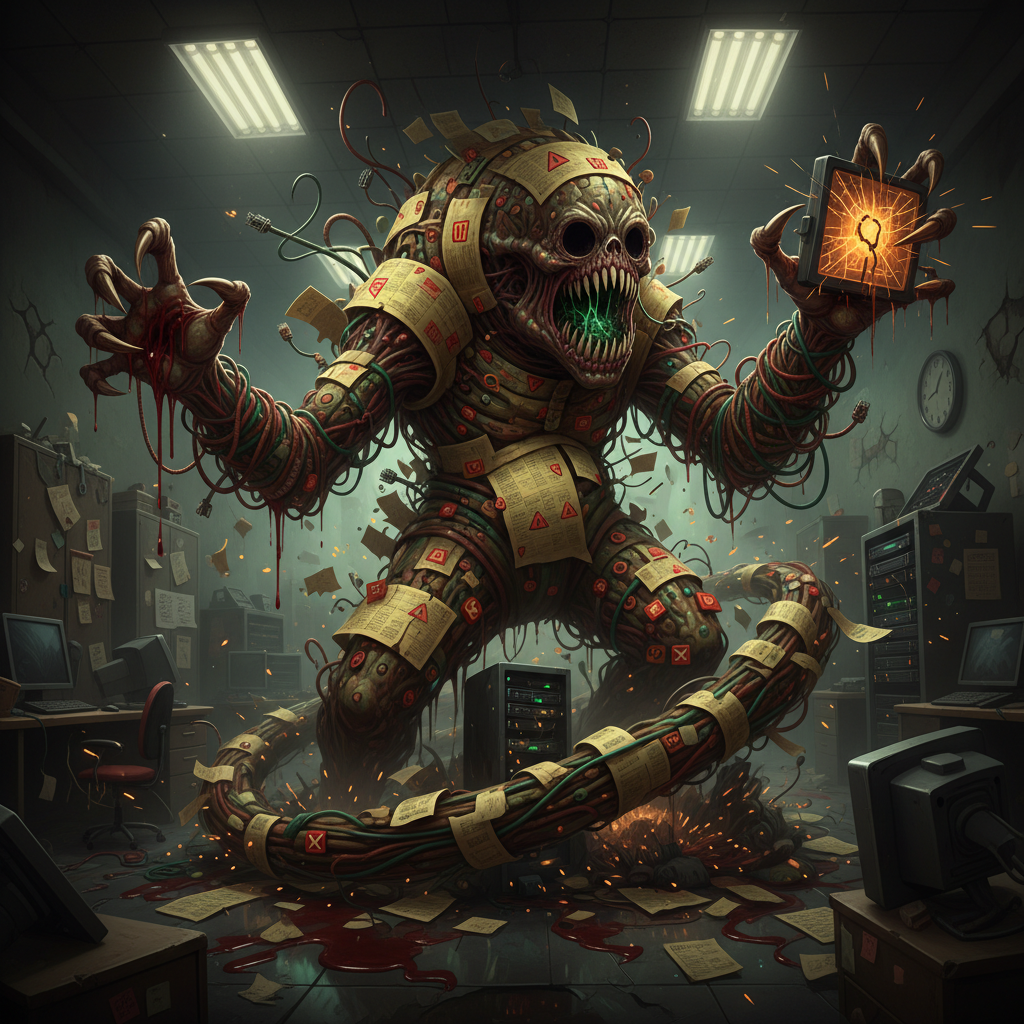
This isn't just an annoying administrative hassle; it's a colossal waste of time and money. We're talking about an average of 45-60 minutes per customer lost in the weeds. Why? Because you’re treating email like a CRM and a spreadsheet like a mission-critical database. It's a recipe for a cascade of errors – we're seeing a staggering 5% data error rate in this manual process – and that's before we even look at the astronomical cost of fixing those mistakes, let alone the customers who bail because their initial experience felt like navigating a digital labyrinth. These aren't just minor inconveniences; they are, in essence, £30,000 churn bombs waiting to detonate.
The Anatomy of Onboarding Friction: Diving Deep into the £30K Churn Bomb
You might be thinking, "Hold on, my onboarding process is pretty straightforward. We send a welcome email, get some details, and then things tick along." That's the illusion. What appears to be a smooth handoff is often a deeply flawed system propped up by sheer human effort. This reliance on manual data transfer and communication is the breeding ground for errors, frustration, and ultimately, churn.
Technical Debt and the "Email as Database" Anti-Pattern
The core of the problem is the desperate, almost pathological, reliance on email for everything. When a deal closes, instead of the crucial customer data flowing seamlessly into your operational systems – your CRM, your billing, your service delivery platform – it gets forwarded, CC'd, BCC'd, and laboriously copied into a "master spreadsheet" that likely lives on someone's personal laptop or in a shared drive that hasn't been cleaned up since 2018.
This creates massive, gaping integration gaps. Your payment processor isn't talking to your email marketing tool, which isn't talking to your project management system, which certainly isn't talking to your customer success platform. Email becomes the clunky, unreliable intermediary, the digital equivalent of shouting across a crowded room.
This manual data wrangling is where the precious minutes of your highly paid team members tick away. We're talking about an average of 12-15 minutes per customer just to decipher what you actually need from the labyrinthine email chain. Extracting essential information – company size, package tier, specific project requirements, preferred contact methods, and any bespoke requests cobbled together from various replies – consumes valuable bandwidth. This isn't just inefficient; it's the antithesis of a professional, scalable operation. All this time spent on administrative grunt work could be spent actually serving your paying customers, driving adoption, and building long-term relationships.
The Real Cost of "Good Enough": How Your Onboarding Emails Are Leaking Cash
Let’s get blunt. You think your onboarding emails are doing their job. A quick reply here, a slightly-less-quick file upload request there, and a tentative Google Sheet update. Easy peasy, right? Wrong. What looks like a smooth customer handoff is actually a severely leaky faucet, and those steady drips are costing you a fortune in lost revenue and wasted resources.
We’ve crunched the numbers, and they’re stark. For businesses with 5 to 50 employees, this "manual-as-can-be" onboarding process isn't just an operational headache; it's a financial black hole, eating up an estimated £36,000+ annually. That’s not merely the aggregate hours your team is killing time copying and pasting data between disparate systems. It's the cascading effect of those hours: the frustrating, time-consuming back-and-forth with customers due to misunderstood instructions, the costly missed details leading to inevitable errors (a ridiculous 5% of the time, yikes!), and, critically, the customers who simply get fed up with the friction and bail.
That £36k figure is just the starting point of your onboarding financial pain. It doesn't even begin to factor in what it costs to fix those inevitable mistakes – the redeployments, the extra support calls, the re-education of a customer who received the wrong information. And let’s be honest, the brand damage and the negative word-of-mouth that directly result from a botched onboarding experience. This is how your "quick" welcome email transforms into a £30,000 churn bomb.
The root cause remains the same: you’re using email like a digital Rolodex and a filing cabinet rolled into one, and spreadsheets as your illegitimate child CRM. Your payment processor, your CRM (if you even have one that’s actually integrated and used effectively), and your actual service delivery systems are all speaking different languages, with email acting as the clunky, error-prone translator. This pervasive "technical debt" means your team spends that crucial 12-15 minutes per customer just trying to decipher and transfer essential information. Multiply that by your customer acquisition rate, and you're looking at half an hour to an hour per customer lost in the administrative weeds, a significant chunk that directly impacts your bottom line.
The Churn Bomb in Action: A Real-World Scenario
Let’s paint a picture. Sarah from Sales closes a deal with a new client, "Innovate Solutions." She sends a cheerful “Welcome aboard!” email to the client's main contact, attaching a PDF with their agreed-upon services and a link to a Google Form for additional details. This email also gets CC'd to Mark in Operations and Chloe in Customer Success.
- The First Drip: Mark receives the email. He opens it, scans the PDF, and then opens his trusty "New Clients" spreadsheet. He manually types in the company name, client POC, and the service package. He misses a crucial detail in the PDF about a specific integration requirement because the formatting was a bit off. Cost: 5 minutes.
- The Second Drip: Chloe receives the same email. She opens her task management tool and creates a new ticket for "Innovate Solutions." She copies and pastes the client's email address from the original email, but a typo creeps in because she was distracted by another urgent query. Cost: 3 minutes.
- The Integration Gap: The account manager, who wasn't CC'd, is waiting for the client's payment details, which were only mentioned in a buried sentence within the original sales proposal email. Payments aren't processed. Cost: Client confusion, potential delay.
- The Error: When the service team starts onboarding, they realize the overlooked integration requirement is critical and wasn't set up. This forces them to either delay the project, incurring resentment, or rush to fix it, introducing more potential errors. Cost: 2 hours of senior engineer time, potential client dissatisfaction.
- The Churn: Innovate Solutions experiences delays, has to reiterate information multiple times, and feels like they’re not a priority. They start looking for alternatives. After a few weeks of a disjointed and unprofessional experience, they cancel their contract. Cost: The full value of that customer, likely far exceeding the £30,000 this pattern of errors and dissatisfaction represents over their potential lifetime value.
This isn't an isolated incident. This is the reality for countless SMBs, a subtle but deadly drain on resources and customer loyalty.
The True Cost of "Good Enough": Beyond the £36k Annual Drain
We’ve established that the manual, email-centric onboarding process is a financial drain. That £36,000+ annual cost for a 5-50 employee business isn't just an abstract number; it represents lost productivity, missed opportunities, and ultimately, revenue that could have been reinvested into growth. But here's where it gets even more painful: that figure is conservative. It’s the direct cost of inefficient processes. The indirect costs – the cost of poor customer experience, brand damage, and the compounding effect of churn – are exponentially higher.
Think about it:
- Customer Acquisition Cost (CAC) Erosion: You’ve spent significant money, time, and effort acquiring that customer. If they churn within months, that CAC is essentially wasted, inflating your overall marketing and sales spend.
- Reputational Damage: Unhappy customers don’t just leave; they talk. Negative reviews and word-of-mouth can deter future prospects, creating a perpetual cycle of churn and expensive acquisition.
- Missed Upsell/Cross-sell Opportunities: A smooth onboarding builds trust and sets the stage for future growth within that customer relationship. A bumpy start kills that potential dead.
- Employee Morale and Burnout: When your team is constantly bogged down in manual, repetitive, and error-prone tasks, it breeds frustration and burnout. This impacts overall productivity and can lead to higher employee turnover.
The £30,000 churn bomb isn't just about the immediate loss of a single contract. It's about the ripple effect that damages your business's long-term health and profitability.
Plugging the Leaks: Smart Automation for Seamless Onboarding
The good news? You don't need a Silicon Valley-sized budget or a team of rocket scientists to rip up your entire infrastructure and start from scratch. We’re talking about smart, targeted automation that addresses the most significant pain points directly. The goal isn't to replace your existing tools but to make them talk to each other.
This is where modern automation tools and techniques can be your best friends. Instead of treating email as your database, you can build bridges between your existing systems.
Practical Takeaways: Your Onboarding Upgrade Playbook
Here are actionable steps you can take, ranging from accessible to more advanced:
1. Centralize Customer Data Collection:* The Low-Tech Start: Standardize your intake forms. Instead of a freeform Google Form, use one with clear fields for all essential data points. Ensure this form feeds directly into a centralized system (even if that’s initially a more structured database than a messy spreadsheet).
* The Mid-Tech Solution: Utilize tools like Typeform, Jotform, or Google Forms combined with Zapier or Make (formerly Integromat) to automatically push data from your forms directly into your CRM, project management tool, or a Google Sheet (structured like a database, not a free-for-all).
2. Automate Welcome Sequences with Smart Triggers: Beyond the "Hello": Your welcome email should be the start* of an automated journey, not the end. Based on the customer's package or specific needs identified during sales, trigger a series of tailored emails.* Example: If a customer signs up for "Premium Support," automatically send them an email with links to advanced documentation and an invitation to an exclusive webinar. If they sign up for "Basic Setup," send them step-by-step guides.
* Tools: Your existing email marketing platform (Mailchimp, HubSpot, ActiveCampaign) can handle this with basic segmentation and automation.
3. Integrate Your Core Systems:* The "Why": This is where you eliminate manual data entry and reduce errors. If your CRM doesn't talk to your billing system, or your project tool doesn't talk to your communication platform, you're bleeding money.
* Practical Steps:* Zapier/Make: These are your best friends for connecting hundreds of different applications without writing code. A common automation: When a new deal is marked "Closed Won" in your CRM, automatically create a new client record in your project management tool and send a notification to the onboarding team.
* Google Apps Script: For those deeply invested in the Google ecosystem, Apps Script allows you to automate tasks between Google Sheets, Docs, Forms, Gmail, and more. You can build custom solutions to parse emails, update spreadsheets, and send notifications.
* n8n.io: An open-source, self-hostable workflow automation tool that offers a powerful alternative to Zapier and Make, often with more flexibility for complex workflows.
* Dedicated APIs: If you have custom-built software, leverage APIs to create direct integrations. This usually requires developer resources but offers the most robust solutions.
4. Implement a Unified Customer Hub (Even a Simple One):* The Goal: Give customers a single, clear place to find information, track progress, and communicate. This reduces the need for them to chase down individuals via email.
* Options:* Your CRM's Client Portal: Many CRMs offer client portal features that can be configured to display relevant information.
* Dedicated Knowledge Base + Support Ticket System: Tools like Zendesk, Intercom, or even a well-structured Confluence space can serve as a self-service hub.
* Simple Dashboard: For some businesses, a custom dashboard pulling key information from various systems can be highly effective.
The ROI of Automation: From £36K Drain to £40K+ Gain
The good news is that this isn't about chasing the latest, most expensive SaaS solution. It's about smart integration and leveraging the power of automation to plug those leaky API gaps. By implementing even basic automation, you can drastically reduce the 45-60 minutes per customer spent on administrative tasks.
We're looking at achievable savings of £15k-£25k in the first year by eliminating manual data entry and reducing errors. As your customer base grows and your automated workflows become more sophisticated, those savings climb. By year three, as you eliminate the costly mistakes, the rework, and the churn they cause, you're looking at £40k-£50k+ saved annually. Imagine what you could do with that capital: invest in new talent, upgrade your core services, or simply boost your profit margins.
Time to Stop the Bleed and Turn Onboarding into a Growth Engine
Your "quick" customer onboarding emails are not just a communication channel; they're a critical touchpoint that can make or break a customer relationship. The current fragmented, manual approach isn't just inefficient; it's actively costing you tens of thousands of pounds in churn and lost productivity. The £30,000 churn bomb isn't a metaphor; it's the tangible impact of onboarding friction on your bottom line.
It's time to evolve. It's time to move beyond the email-and-spreadsheet black hole and embrace intelligent automation. This isn't about adding more complexity; it's about creating clarity, efficiency, and a truly exceptional customer experience from day one.
Ready to transform your onboarding from a cost center into a revenue driver?At Aremu Consulting, we specialize in helping SMBs like yours eliminate onboarding friction and unlock predictable, scalable growth. We don't believe in one-size-fits-all solutions. We work with you to understand your unique challenges and implement tailored automation strategies that deliver measurable results.
Stop the churn. Start growing. [Book a Free Consultation with Aremu Consulting Today]([Link to your consultation booking page])Let's turn those £30K churn bombs into a £40K+ annual profit driver.
---