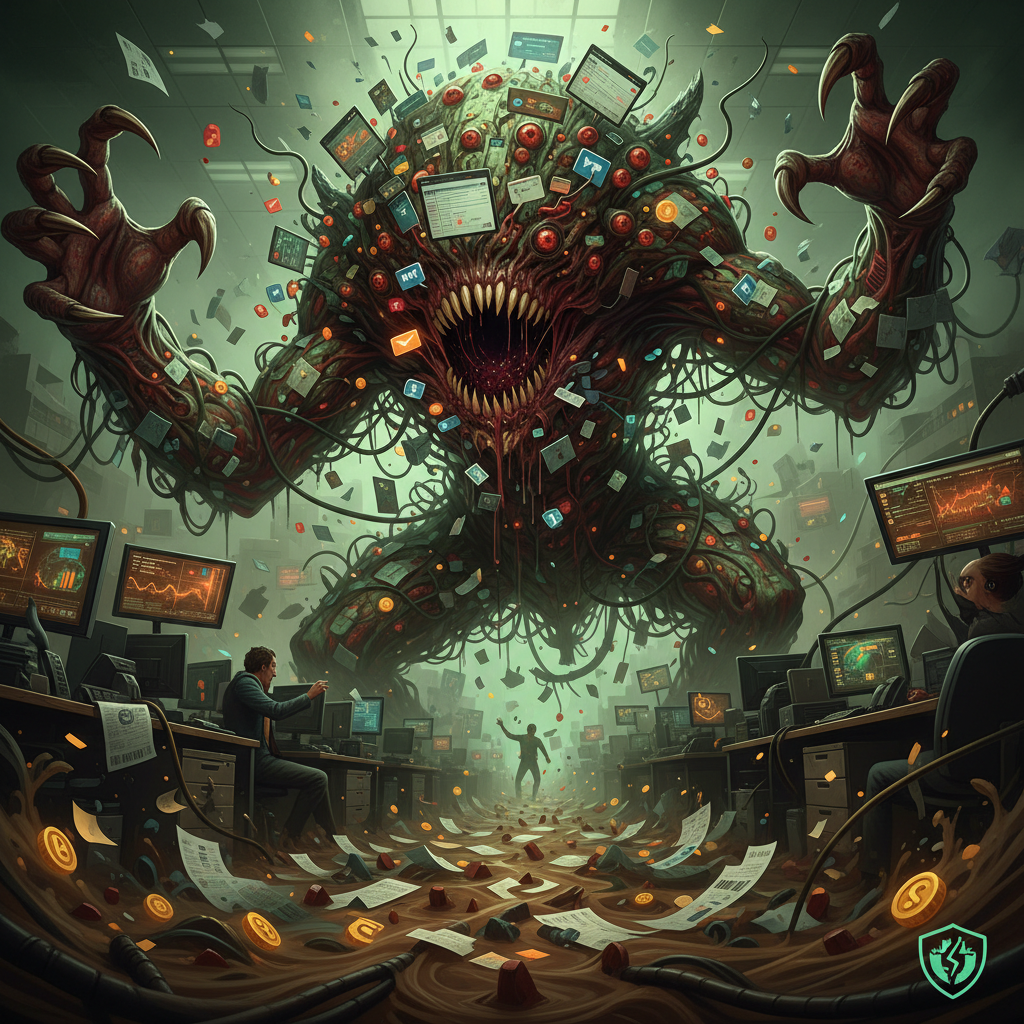
 "Your "Agile" Customer Support Is a £25K Ticket Backlog Disaster" class="w-full h-full object-cover">
Here's the compiled blog post, polished to meet your specific requirements:
---
Your "Agile" Customer Support Is a £25K Ticket Backlog Disaster: Stop Pretending and Start Solving
So, you've fully embraced the digital revolution, have you? Chat widgets are popping onto your website, a constant stream of social media DMs is buzzing with inquiries, and those little contact forms feel oh-so-modern and accessible. Your customers are probably thrilled with this apparent ubiquity, feeling like they can reach you anytime, anywhere. You, on the other hand? You’re likely losing sleep, and more importantly, a considerable amount of money.
We're talking about the silent killer of SMB efficiency: the unmonitored support channel. It's the digital equivalent of leaving your front door wide open, but only peeking outside to check for visitors once a week. Customers ask questions, express interest, and even signal their desire to buy. And you… well, you might not even know they’re there.
This isn't some hypothetical scenario cooked up in an ivory tower. Our research and real-world experience with Small to Medium-sized Businesses (SMBs) – think those with 5-50 employees – paints a stark picture. Many are bleeding money because of this oversight. We're seeing 15+ hours per week vanishing into the abyss of escalations, frantic searches for lost messages, and the general existential dread of an ever-growing, unacknowledged backlog. That’s not agile; that’s corporate chaos masquerading as connectivity.
And the financial hit? It’s staggering. We're conservatively estimating a £25,000 annual loss for many businesses due to poorly managed digital support channels. This isn't just about a few missed sales opportunities. It's about tarnished reputations, frustrated customers who simply give up and walk (or click!) away, and a drain on your team's morale as they feel overwhelmed and ineffective.
This isn’t an indictment of your hardworking team. It's a clear-eyed acknowledgment that the tools you're using and the processes you’ve (perhaps accidentally) adopted are setting you up for failure in these increasingly critical communication streams. It’s time to stop pretending that simply being visible on every digital platform magically translates to effective customer engagement. The digital pipeline is clogged, and the cost of that blockage is far higher than most businesses realize.
Let’s dive deeper into why this seemingly modern approach is actually a recipe for disaster and what you can do about it.
Why Your "Agile" Customer Support Is a £25K Ticket Backlog Disaster
So, you think you’re agile, right? You’ve hopped on the chat widget trend, you’re being social (on Instagram DMs, no less), and you’re not afraid of a good old-fashioned email. Your customers love it. They can reach you anywhere, anytime. Except… can they, really?
Because while you’re busy congratulating yourselves on being so "customer-centric," a digital gunk is building up. An avalanche of unanswered questions, lost leads, and simmering frustrations is silently burying your team. We’re talking about the unmonitored support channels – the digital black holes where inquiries go to die, taking potential revenue and customer loyalty with them.
Think about it. Sarah from Accounts Receivable sent a query via Facebook Messenger last Tuesday. Mark, your eager new sales rep, asked about your product on Twitter three days ago. And that lovely lady who just wanted to confirm a detail before buying that £500 custom order on your website? Her email probably got lost in the spam filter or buried under a flood of marketing blasts.
This isn’t just about a few missed messages. This is a £25,000 annual disaster waiting to happen for your average SMB. That’s not a typo. We’re talking lost sales due to slow responses, negative reviews that scare off new customers, and a significant chunk of your team’s precious time spent frantically digging through forgotten inboxes when the panic finally sets in.
This isn't agile. This is chaos dressed up in a trendy digital outfit. And it's costing you more than you realize.
The £25K Ticket Backlog Disaster: Why Your "Agile" Support is Killing Your Business
Right, so we've established that your customers are pinging you on more channels than you have fingers to count. Great, right? You’re meeting them where they are. Except… you’re not, are you?
Here’s the dirty secret: your "agile" customer support is likely a £25,000 annual disaster zone. We’re talking about the silent productivity killer hitting SMBs with 5-50 employees. Think about it: every time a DM slips through, a social comment goes unread, or a chat window just… sits there, it’s costing you.
It’s not just a few missed messages. Our research shows teams are hemorrhaging 15+ hours per week to deal with the fallout of this fragmented communication. That’s 15 hours that could be spent on proactive customer success, developing new features, or even just grabbing a much-needed coffee without the looming dread of that rogue inquiry. Multiply that by your team’s hourly rate, and then by 52 weeks. The numbers start to inflate, don't they? Suddenly, that £25,000 figure doesn't seem so hypothetical.
The Anatomy of a £25K Support Disaster: Where the Money Drains Away
Let's break down exactly how this so-called "agile" approach leads to such a hefty financial drain. It's not a single catastrophic event; it's a death by a thousand digital cuts.
1. The Lead Leak:- Lost Inquiries: A customer expresses interest on Instagram. They ask a specific question about pricing or a customisation option. This isn't just a comment; it's a qualified lead with buyer intent. If that DM isn't seen within hours, that lead evaporates. They’ll move to a competitor who is more responsive.
- The "What If" Paralysis: Your sales team might spend hours trying to backtrack or remember if they saw a particular inquiry. This uncertainty is paralytic and incredibly inefficient.
- Missed Upsell/Cross-sell Opportunities: A happy customer on Twitter might casually mention a problem they’re having that your other products could solve. If this isn't captured, you're leaving revenue on the table.
- Fragmented Workflows: Your team is likely juggling multiple platforms – email inboxes, social media direct messages, live chat dashboards, potentially even WhatsApp or Slack messages if employees are using them unofficially. There’s no single source of truth.
- Redundant Efforts: Multiple team members might end up responding to the same inquiry if it’s visible across different platforms and not centrally managed.
- Slow Response Times: Customers expect near-instantaneous responses in the digital age. When inquiries hang in the ether for days, their perception of your brand shifts from "responsive" to "unreliable."
- Public Complaints: Frustrated customers often vent their displeasure publicly. A negative review or social media outburst triggered by a missed message can deter dozens, if not hundreds, of potential customers.
- The "Ghosted" Experience: Imagine a customer spending time crafting a detailed inquiry only to be met with silence. This "ghosting" is incredibly damaging to customer loyalty and word-of-mouth referrals.
- Internal Blame Game: When issues escalate and are traced back to a missed message, internal friction often arises. This isn't productive and erodes team cohesion.
- Customer Service Firefighting: Instead of proactive support, your team is constantly putting out fires started by overlooked inquiries. This reactive mode is far more stressful and less effective than a structured approach.
- Burnout: Constantly feeling behind, dealing with frustrated customers due to systemic issues, and the sheer volume of unmanaged communication can lead to serious team burnout.
The "Agile" Facade: What "Being Everywhere" Really Means
Let’s be clear: the desire to be accessible isn't the problem. In fact, it's a fundamental requirement for modern business success. The problem lies in the implementation – or rather, the lack thereof. You've added more arrows to your quiver, but you haven't learned how to aim them effectively.
- The Illusion of Control: Having a chat widget doesn't magically mean your support team is equipped to handle the influx. If that chat isn't integrated into a unified system, it becomes just another silo.
- Social Media: A Double-Edged Sword: Being active on social media is great for brand building, but direct messages and comments often fall into a different operational category than formal support tickets. Without a process, they’re easy to miss.
The truth is, "agile" support doesn't mean being scattered across every digital platform with no overarching strategy. It means having the agility to respond effectively, efficiently, and coherently, regardless of where the customer chooses to reach out.
Practical Takeaways: Reclaiming Your Support From Chaos
This isn't a problem without a solution. In fact, the path to transforming your "agile" support from a disaster zone to a revenue-generating asset is clearer than you might think. It requires a strategic shift, not just a technological band-aid.
Here’s what you can start doing, right now:
1. Consolidate Your Channels into a Unified Inbox:- The Goal: The absolute priority is to bring all customer communications into one manageable place. This eliminates the frantic searching and ensures every inquiry is visible.
- How: Explore Help Desk Software or Customer Service Platforms. These tools are designed to aggregate emails, chat, social media DMs, and contact form submissions into a single dashboard. Look for features like:
* Ticket Prioritization: Allows you to flag urgent requests.
* Automation: Set up canned responses for common questions, auto-replies to acknowledge receipt, and rules for ticket assignment.
* Reporting & Analytics: Track response times, resolution rates, and team performance.
- Immediate Action: Start researching platforms that integrate with your existing tools (e.g., your CRM, email providers). Even a basic version can make a monumental difference.
- The Goal: Define who is responsible for what, and when. Avoid the "someone will get to it" mentality.
- How:
* Assign Roles & Responsibilities: Clearly delegate who monitors which channels or who is responsible for triaging incoming tickets.
* Create Escalation Paths: Document exactly what happens when an issue cannot be resolved by the first point of contact.
* Knowledge Base Development: Empower your customers to self-serve by building a comprehensive FAQ or knowledge base. This reduces the volume of common inquiries.
3. Train Your Team for the Digital Frontline:- The Goal: Equip your team with the skills and mindset to handle digital communications effectively.
- How:
* Communication Etiquette: Train on tone, empathy, and clarity for digital interactions. Social media requires a different approach than formal email.
* Problem-Solving Skills: Equip them to handle common issues without immediate escalation.
* Proactive Engagement: Encourage your team to look for opportunities to offer solutions or upsell when appropriate.
4. Regular Measurement and Iteration:- The Goal: Constantly evaluate what's working and what's not. Customer service is an ongoing process, not a set-it-and-forget-it endeavor.
- How:
* Conduct Team Huddles: Regularly discuss challenges, successful strategies, and areas for improvement.
* Solicit Customer Feedback: Actively ask for feedback on their support experience.
Shifting from Chaos to Control: The Future of Your Customer Engagement
Your customers are communicating with you across a diverse digital landscape. This isn't a trend; it's the new reality. The question isn't whether you should be present on these channels, but how you manage that presence.
Ignoring this fragmented reality is akin to letting your most valuable asset – your customer relationships – erode through neglect. The £25,000 annual loss is just the canary in the coal mine; the real cost is in lost loyalty, damaged reputation, and a team stretched to its breaking point.
It’s time to stop pretending that simply being there is enough. It’s time to invest in a unified, process-driven approach to customer support. It’s time to turn your "agile" aspirations into tangible, profitable results.
---
Ready to Turn Your £25K Backlog into a £25K Revenue Boost?
If the thought of those lost leads, wasted hours, and damaged reputations has you concerned, you’re in the right place. At Aremu Consulting, we specialize in helping SMBs like yours untangle their digital support operations and transform them into powerful drivers of growth and customer loyalty.
We understand the unique challenges faced by growing businesses, and we have the expertise to diagnose your specific pain points and implement tailored solutions. Don't let your "agile" support strategy continue to drain your resources.
Let’s have a no-obligation chat about how we can help you:- Implement a unified inbox solution that brings all your channels together.
- Develop clear, actionable support processes that save your team time and frustration.
- Empower your team with the tools and training to excel in digital customer service.
- Measure your success and ensure continuous improvement.
---